
The Council Renewables Advantage
A wind, solar or BESS project is coming to your council area. Since July 2025, Queensland law requires a negotiated Community Benefit Agreement before it can lodge its development application — which means the council that prepares first negotiates from strength, and the council that doesn't negotiates from an open hand. The Renewables Community Benefit Toolkit exists to make sure your council is the former.
$850–$1,050/MW/yr standing benchmark
$840K vs $100K same-state outcome gap
1 window before lodgement — it doesn't reopen
Same Law. Wildly Different Outcomes.
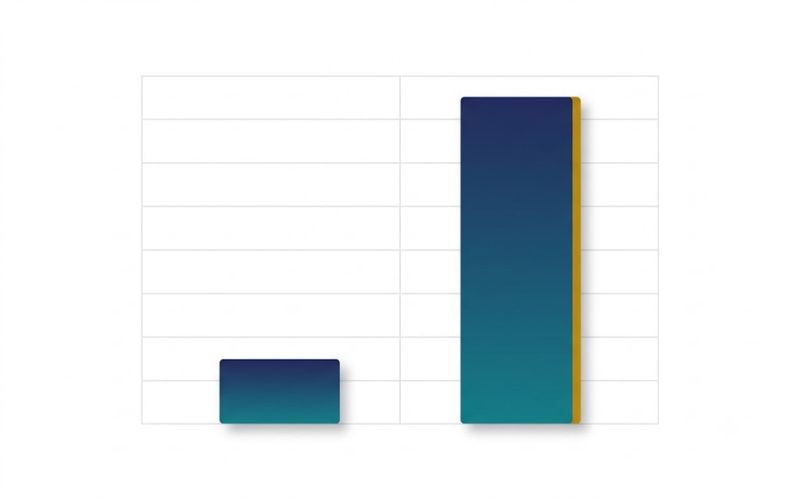
Two Queensland councils, the same legislation, two outcomes four times apart. One secured $840,000 a year on an 800MW wind farm, negotiated under the state's 2025 Community Benefit Agreement law. A comparable project elsewhere settled for $100,000 a year — a legacy, voluntary deal struck before the law existed and never revisited.
The difference wasn't the project, the developer, or the council's size. It was whether the council walked into the negotiation with a sourced benchmark and a costed position, or without one. That gap compounds — a legacy rate locked in at the wrong number stays locked in for the life of the project, often 25 to 35 years.
Why Councils Lose Leverage Without Knowing It
The Window Closes the Moment the DA Is Lodged
Under Queensland's PSICBOLA framework, a Social Impact Assessment and a binding Community Benefit Agreement must both be finalised before a wind, large-scale solar, or standalone battery storage project can lodge its development application. That's the only point in the entire project lifecycle where a council has genuine negotiating leverage — once the DA is in, it doesn't reopen.
Most councils don't realise how narrow that window is until a developer is already at the table. By then, the deadline pressure sits with the council, not the developer.
Three Developers, One Council, No Policy
It's rarely one project at a time. Councils across Queensland are fielding pre-application contact from multiple developers within the same short window — wind, solar, and battery storage projects stacking on top of each other, each with its own timeline and its own leverage point. Without a policy, a benchmark, and a live map of what's actually coming, a council ends up negotiating each one from scratch, under pressure, with no reference point.
The construction workforce overlap compounds the problem. Three concurrent projects can mean hundreds of workers arriving into a town that's never planned for accommodation, local supplier capacity, or the strain on services — on top of the CBA negotiations themselves.
Five Tools. One Architecture.
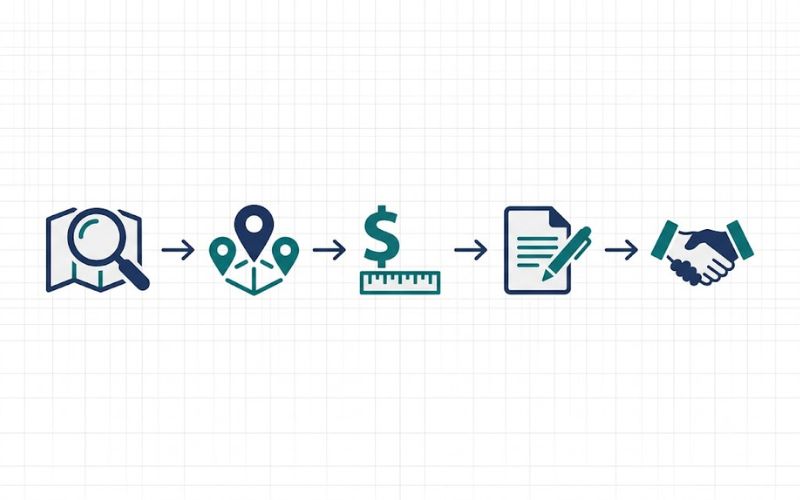
The Renewables Community Benefit Toolkit is five connected tools, not five separate forms. A Regional DNA Profile of your council feeds a live Project & Impact Map of everything touching your LGA. That map feeds a Benchmark Calculator, checked against real, sourced Queensland comparables — not a rule of thumb. The benchmark feeds a costed Negotiation Position Builder brief, ready for the table. And a Local Business & Community Readiness Pack turns the construction window into captured local value.
Every benchmark figure the toolkit uses is sourced and confidence-rated against a real, named comparable — not an industry rule of thumb. That's the same standard applied across every module, from the Regional DNA Profile through to the final negotiating brief.
Proven on a Live Pilot
Nardoo Shire Council — a fictional pilot council — ran all five modules against three concurrent renewable projects: a wind farm, a solar farm, and a solar-plus-battery hybrid. The result: a costed negotiating position worth $589,500 a year across all three projects, and — just as importantly — a toolkit that correctly withheld two documents until the facts on the ground actually justified releasing them.
Beyond Nardoo, the same benchmark methodology has been applied region-wide — see the 18-town North Queensland hosting capacity and CBA table.
What This Produces
Five modules, five concrete outputs — each one a real document your council can put in front of a developer, not a dashboard or a diagnostic score.
- A verified Regional DNA Profile — housing, infrastructure, and strategic priorities captured before a developer ever arrives.
- A live Project & Impact Map — every wind, solar, storage, and transmission project touching your council, staged and workforce-mapped.
- A sourced Benchmark range — $850–$1,050/MW/yr for wind and solar, checked against real Queensland comparables, not an average.
- A costed Negotiation Position — the ask, the comparables, and a staged local priority list, ready for the table.
- A Standing Community Benefit & Local Economic Capture Plan — every funding and supplier channel your council and community can access, live for the life of the project.
Is This Your Council?
This is built for Queensland local governments with a wind, solar, or standalone battery storage project already in pre-application contact, in the SARA pipeline, or expected within the next negotiating cycle — whether that's one project or three at once. It's equally relevant to councils that haven't been approached yet: the preparation work (the Regional DNA Profile and benchmark range) holds its value regardless of when a developer turns up.
If your council has no adopted CBA policy, no benchmark on file, and no single view of what's actually coming — that's the exact starting point this toolkit is built for. It's also built for councils that already have a policy in place and want it checked against real, current comparables before the next negotiation opens.
Book a CBA Readiness Scoping Call
A 30-minute call to confirm your project, your stage, and where your council's leverage window actually sits.
Built by People Who've Sat on Both Sides of the Table
Matthew Bulat — Architect of the Toolkit
Matthew Bulat built the Renewables Community Benefit Toolkit on the same architecture as CDD's 7 Tools system, already proven with North Queensland civil contractors. His background spans two decades in government-adjacent compliance and operations, including project management work for Townsville City Council — the same procurement and public-sector environment this toolkit is built to operate inside.
Raymond Ward — CEO, ISO Lead Auditor
Raymond Ward is CEO of Consultancy Done Differently and an ISO Lead Auditor across quality, safety, and environmental management standards — the same audit rigor applied to every negotiating position this toolkit produces before it's released to a developer. Before founding CDD, Raymond spent fifteen years inside the Australian Taxation Office building the compliance systems that processed returns for over 100,000 Australian businesses a year.
Frequently Asked Questions
Who is this for?
Queensland local governments — councils, shires, and regional councils — with a wind, solar, or standalone battery storage project in their area, at any stage from early developer contact through to an active negotiation.
How is this different from just following the Queensland Government's own guidance?
The state's PSICBOLA framework tells a council what's required — an SIA and a CBA before lodgement. It doesn't tell a council what a fair rate looks like, how to sequence multiple concurrent negotiations, or how to turn the construction window into captured local value. That's the gap this toolkit closes.
Do you work with councils that don't have a project yet?
Yes. The Regional DNA Profile and benchmark range hold their value whether a developer has made contact or not — councils that prepare before the pre-application stage walk into the negotiation already ahead.
How fast can a council get a negotiating position ready?
It depends on how much groundwork is already done and where the project sits in its own timeline. The CBA Readiness Sprint runs Modules 1 through 3 into a costed negotiating brief; most councils move through it in stages rather than a single sitting.
Is this connected to the CDD 7 Tools system for NQ contractors?
Yes — it's built on the same five-connected-tools architecture, applied to the other side of the negotiating table. Where 7 Tools helps a contractor document their way onto a Tier 1 panel, this toolkit helps a council negotiate the agreement that project sits under.
What does this cost?
It's a paid, direct-to-council engagement, staged from a scoping call through to a full CBA Readiness Sprint. Pricing depends on how many projects and modules are in scope — the scoping call establishes that before anything is quoted.