
Supply Chain Readiness — Build a Tender-Ready Subcontractor Panel
A stronger subcontractor panel means more competitive tenders, fewer delivery risks, and projects done at a fair price.

Who This Is Built For
This applies directly if you're managing subcontractor prequalification, supply chain risk, or local content commitments for a Tier 1 delivering government or private infrastructure work in North Queensland — civil, WHS and compliance leads, and project directors deciding who gets onto the panel for the next package.
The Paperwork Gap Behind Every Tender Delay
North Queensland's $40B infrastructure pipeline needs subcontractor supply chain readiness, not more good intentions. The civil contractors your teams already trust to deliver often stall at prequalification for the same reason, every time: not capability, not plant, not experience. Paperwork. No formal WHS management system. An expired public liability certificate. No professional indemnity. No capability statement that actually answers a procurement panel's questions. None of it reflects the work these contractors can genuinely do — but it's exactly what your prequalification process is built to screen out.
What a Thin Panel Costs a Tier 1
Every subcontractor who can't clear prequalification is one fewer genuinely competitive bid on your next package. Head contractors end up cycling the same three or four firms project after project — not because they're the best fit, but because they're the only ones with the paperwork sorted. That concentration shows up later: schedule risk when one firm is overcommitted, compliance exposure when an audit finds a gap nobody caught, and pricing that never gets tested by real competition. A shallow subcontractor panel isn't a subcontractor problem. It's a delivery risk sitting inside your own program.
How CDD Builds Tender-Ready Subcontractors
The 7 Tools System
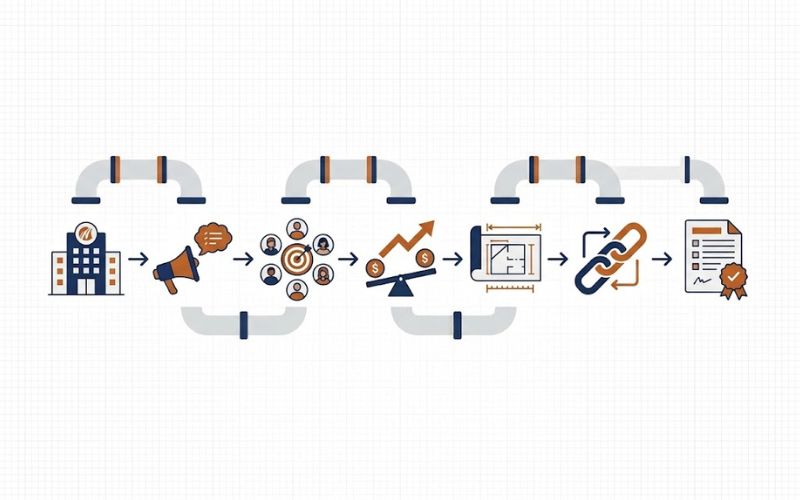
CDD runs North Queensland civil contractors through a connected, seven-tool system — Business DNA, Prompt Assembler, Audience Definition, PVP Builder, Blueprint Builder, Chaining Workflows, and the Application System. Each tool builds on the last, so a contractor never re-explains their business twice. What comes out the other end isn't a folder of generic templates — it's a first-draft grant or tender application, assembled from a complete, contractor-specific document library and ready for a procurement team to actually assess.
What Gets Documented
The library covers what prequalification panels ask for and rarely get in one place: a WHS management system aligned to ISO 45001, current insurance registers, a capability statement, a capacity statement, plant and equipment registers, and a prequalification-ready attachment index. It's the difference between a contractor telling you they're ready and a contractor proving it, document by document.
Proof: From Paper Ceiling to Tier 1 Ready
Redstone Civil is a fictional North Queensland civil contractor used to pressure-test the CDD system, built from a real operating profile with real compliance gaps. Starting point: zero formal WHS documents, an expired public liability certificate, no professional indemnity, and a LinkedIn profile sitting at 40% complete. Seven tools and roughly seven hours later: a 62-document library, 12 compliance gaps closed, $20M public liability and $5M professional indemnity current and confirmed, a 100% All-Star LinkedIn profile, and three submission-ready applications — a $23,440 CSQ workforce training grant, a $1.5M–$3.5M Townsville City Council tender response, and a McConnell Dowell prequalification draft built against real Tier 1 criteria, naming McConnell Dowell, John Holland, and Fulton Hogan as target panels.
Want the Specific Checklist We Use?
If you want to see exactly what a Tier 1 panel checks before it's your team asking, we published the checklist — free, no form, four categories: financials, safety, capability, capacity. It's built from the same document library referenced above.
What This Means for Your Panel
A subcontractor panel built on genuine readiness, not paperwork luck, changes what your procurement team can do. More firms clear prequalification, which means more competitive tension on price. Compliance gaps get caught and closed before an audit finds them, not after. Delivery risk drops because the firms on your panel can actually demonstrate capacity, not just claim it. And a broader, better-documented local supply chain makes it easier to meet local content commitments without compromising on capability.
Start the Conversation
If a stronger, tender-ready subcontractor panel would change what your team can bid and deliver, the conversation starts with Raymond Ward. No form, no funnel — just a direct conversation about where your current panel has gaps and what closing them would look like.
Email Raymond → [email protected] | Connect on LinkedIn → linkedin.com/in/raymondeward
Frequently Asked Questions
What does "tender-ready" actually mean for a subcontractor?
It means a contractor can prove readiness on paper, not just on site. A tender-ready subcontractor has a current WHS management system, valid insurance across all required classes, a capability statement, a capacity statement, and a prequalification-ready document library — the exact set Tier 1 procurement teams check before a firm gets onto a panel.
How is this different from just telling subcontractors to sort their own paperwork?
Most contractors know they need better documentation — they don't have a system for producing it consistently, at the standard your procurement team expects. CDD runs each contractor through a structured seven-tool process that turns existing business knowledge into a complete, audit-ready document library in about a day.
Does this replace our own prequalification process?
No. It strengthens the pool of subcontractors who can actually pass it. Your prequalification criteria and panel decisions stay entirely with your procurement team — CDD's role is making sure more subcontractors arrive with documentation ready to be assessed against those criteria.
How long does it take a subcontractor to become tender-ready?
In the Redstone Civil case study, a complete 62-document library — WHS system, insurance registers, capability and capacity statements, and three draft applications — was produced in roughly seven hours across the full seven-tool system. A half-day session covering the essentials is also available.
Is this specific to North Queensland or civil contractors?
The program is built around North Queensland's civil and infrastructure supply chain and the $40B project pipeline driving it, but the document types apply to any subcontractor trying to clear a Tier 1 panel. Talk to Raymond about your specific trades and region.
How do we refer a subcontractor into this process?
Directly — message or email Raymond Ward with the subcontractor's details and where they're currently getting stuck. There's no form or funnel for Tier 1 referrals; it starts as a conversation about the gap you're trying to close.
Where can I get the specific checklist you mention?
We published it — the Subcontractor Prequalification Checklist covers the same four categories (financials, safety, capability, capacity) as a free, no-form download. It's the practical companion to everything on this page.